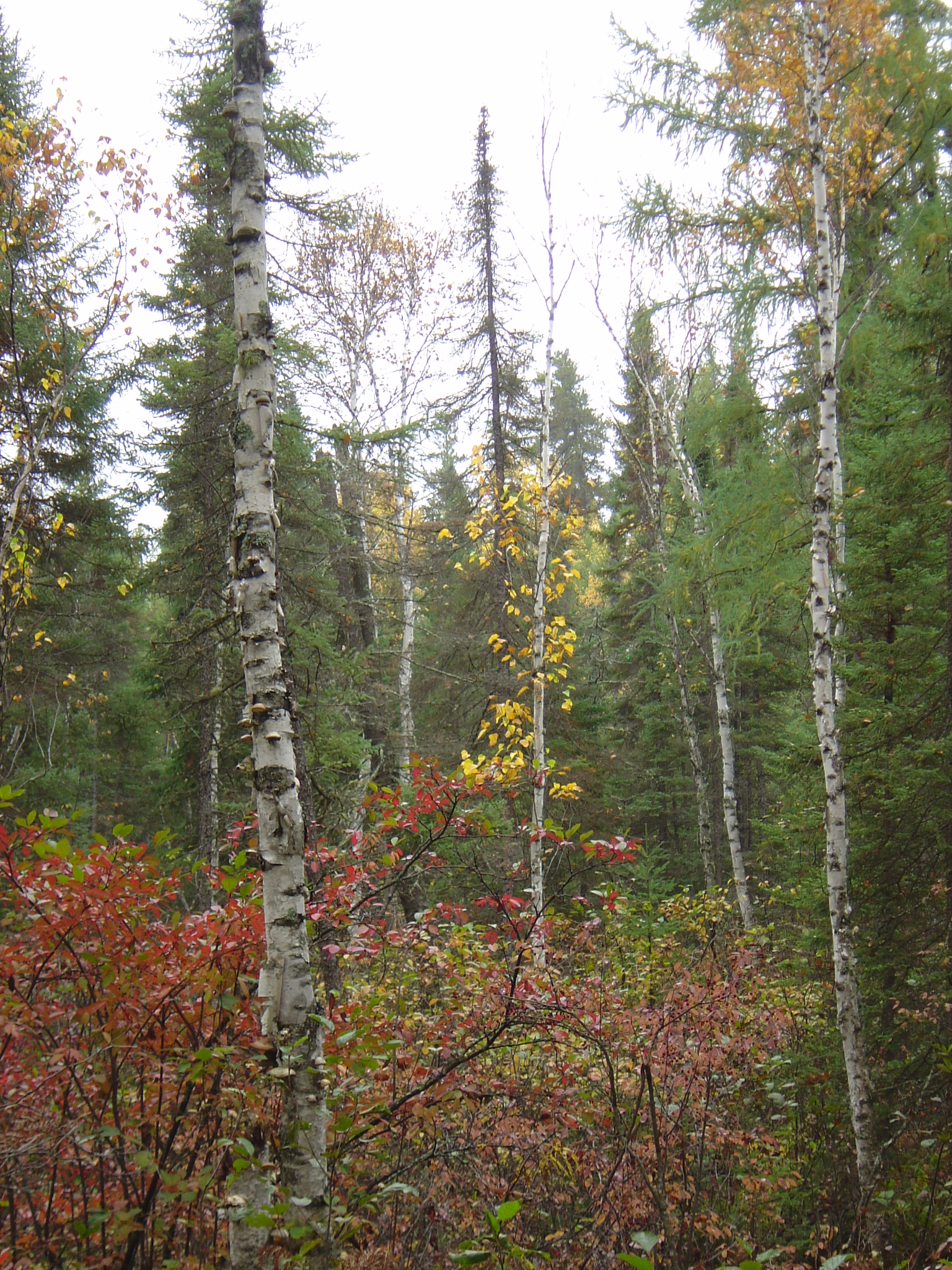
The ground layer of Canada's boreal forest is one of the most biologically dense components of the entire system. While spruce and fir canopies dominate photographs taken from above, the floor beneath them supports a mosaic of mosses, lichens, vascular plants, and fungi that collectively regulate hydrology, nutrient cycling, and carbon storage across an estimated 270 million hectares.
Compositional Layers of the Boreal Floor
The ground layer in a mature boreal stand is typically divided into three informal strata: the cryptogam layer (mosses and lichens), the low vascular layer (sedges, dwarf shrubs, and forbs), and the litter-humus interface below both. These are not discrete bands but interpenetrating zones that shift in composition depending on canopy density, moisture regime, and disturbance history.
Cryptogam Layer
In wet and mesic boreal sites, the cryptogam layer is dominated by sphagnum mosses of the genus Sphagnum. Upward of 40 species occur in Canada's boreal, with S. fuscum, S. capillifolium, and S. magellanicum among the most common in peatland settings. In drier, upland sites, feather mosses such as Pleurozium schreberi and Hylocomium splendens form extensive carpets that can cover more than 80 percent of the ground surface.
Lichens occupy the driest and most exposed positions. In jack pine (Pinus banksiana) stands on sandy outwash plains, Cladonia rangiferina (reindeer lichen), Cladonia stellaris, and Cladonia mitis can dominate the floor almost entirely, producing a pale, continuous mat that is slow to recover after fire or heavy trampling.

Cladonia sp. in a dry boreal site. Photo: Wikimedia Commons / CC.
Low Vascular Layer
Overlying the cryptogam carpet, or interspersed with it, are low-growing vascular plants. The composition varies considerably by region and moisture. In the Hudson Bay Lowlands and across much of the Northwest Territories, Eriophorum vaginatum (tussock cottongrass) and Carex aquatilis are structurally important in wet sedge fens. On better-drained slopes, ericaceous shrubs take over: lingonberry (Vaccinium vitis-idaea), bog bilberry (Vaccinium uliginosum), crowberry (Empetrum nigrum), and Labrador tea (Rhododendron groenlandicum) are among the consistent associates of black spruce across most of the country.
Twinflower (Linnaea borealis), a trailing plant with paired pink flowers, is another reliable indicator of intact boreal ground layer, particularly under dense balsam fir in eastern Canada. Its presence generally signals low historical disturbance and good organic matter accumulation.
Ecological Functions of the Ground Layer
Water Regulation
Sphagnum and feather mosses together act as a living sponge. Sphagnum in particular can absorb 16 to 26 times its dry weight in water, depending on species and saturation state. This capacity has direct consequences for stream hydrology: in watersheds dominated by sphagnum bogs, peak flows following rain events are substantially moderated compared to those with mineral soils exposed.
Beneath the moss layer, the peat profile — which can reach several metres depth in the Hudson Bay Lowlands — acts as a further buffer. Water stored in peat is released slowly through the growing season, sustaining stream baseflow well into late summer when upland sources have dried.
Carbon Storage
Canada's boreal peatlands hold an estimated 150 to 170 petagrams of carbon — roughly equivalent to 20 years of global fossil fuel emissions at current rates. The slow decomposition of sphagnum, driven by the acidic, anaerobic conditions it creates, is the primary reason for this accumulation. The same conditions that inhibit bacterial activity also suppress most fungal decomposers, meaning organic matter added to the peat column persists for centuries to millennia.
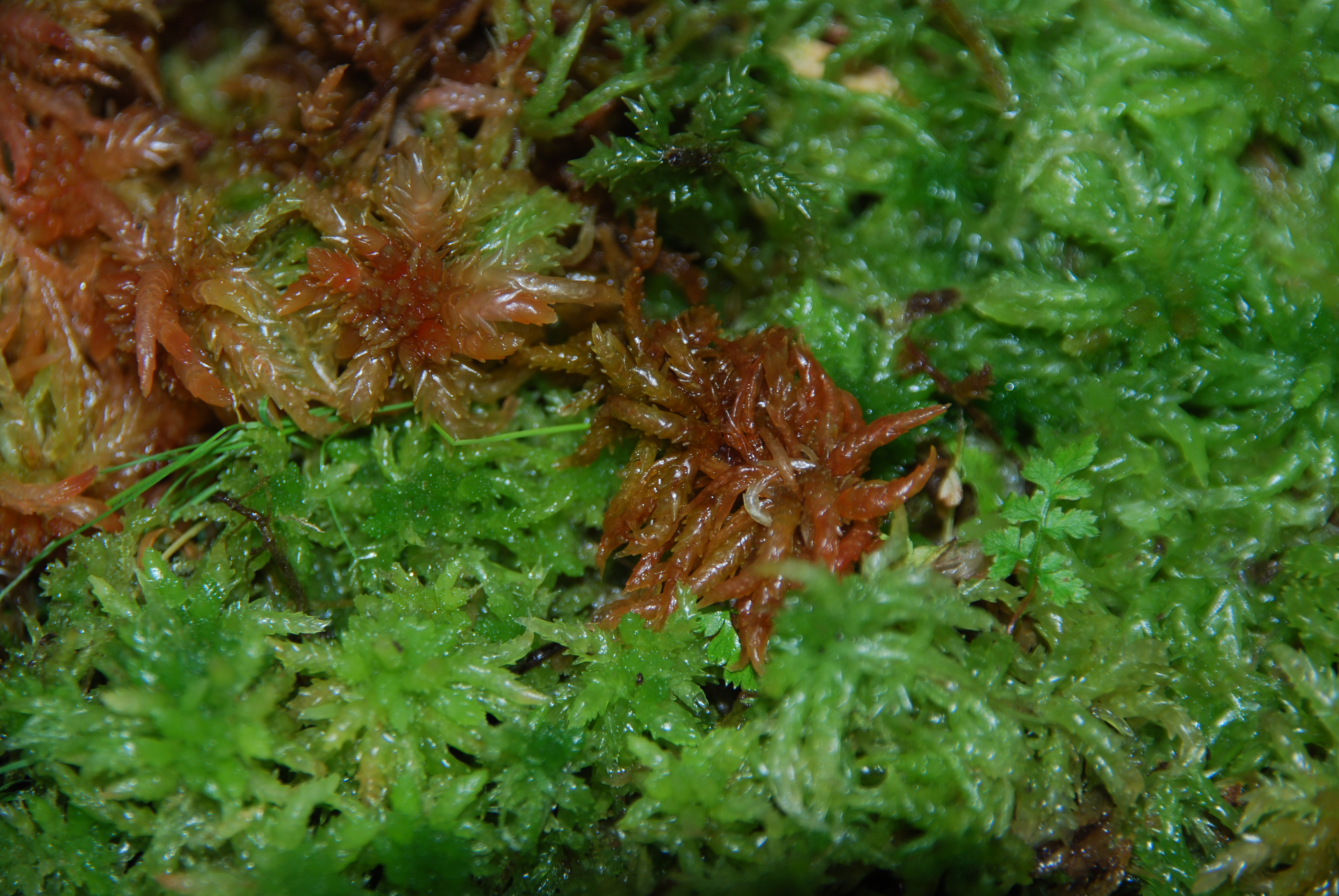
Sphagnum moss, the dominant peat-forming organism across Canada's boreal lowlands. Photo: Wikimedia Commons / CC.
Nutrient Cycling
The feather moss layer, particularly Pleurozium schreberi, plays a documented role in nitrogen fixation through associations with cyanobacteria. Research at boreal sites in Sweden and Canada has estimated that moss-associated nitrogen fixation accounts for 1.5 to 2.0 kg N per hectare per year in some stands — a significant input given how nitrogen-limited most boreal soils are. This fixed nitrogen eventually enters the soil as the moss senescences and decomposes, contributing to long-term site productivity.
Fire and Succession
Boreal ground layer communities are highly fire-adapted, but recovery trajectories differ by community type. Feather moss carpets typically re-establish within 50 to 80 years following a stand-replacing fire. Lichen mats in dry jack pine sites recover far more slowly — reindeer lichen carpets that were fully burned may require more than 150 years to regain their pre-fire coverage, which has management implications in areas where woodland caribou depend on lichen as winter forage.
Sphagnum recovery in wetter sites is generally faster than lichens but slower than feather mosses. Partial peat combustion, which occurs during severe fires when the water table drops, can reset a site to near-mineral soil conditions, delaying the return of sphagnum dominance by decades.
Threats and Monitoring
Climate warming is altering the distribution and composition of boreal ground layer communities in ways that are still being documented. Warmer, drier summers increase fire frequency and severity. Permafrost thaw in the northern boreal collapses the ground surface and shifts wet sphagnum communities to open thermokarst ponds. Meanwhile, shrub encroachment — particularly by alder (Alnus viridis) and willow — is advancing northward and replacing lichen-dominated ground in many sub-arctic transitional zones.
Monitoring efforts such as the Natural Resources Canada forest inventory program and the Boreal Songbird Initiative ground-truth data provide reference points for tracking ground layer change over time, though long-term permanent plot networks specifically targeting cryptogams and low vascular plants remain sparse relative to the area they cover.

